
Search engine optimization is an essential part of building a successful online presence. Businesses, bloggers, website owners, and digital marketers all want their websites to appear when people search for relevant information, products, and services. However, achieving sustainable visibility requires more than publishing articles or adding keywords to website pages. It requires technical improvements, useful content, a clear website structure, and a strong understanding of search intent.
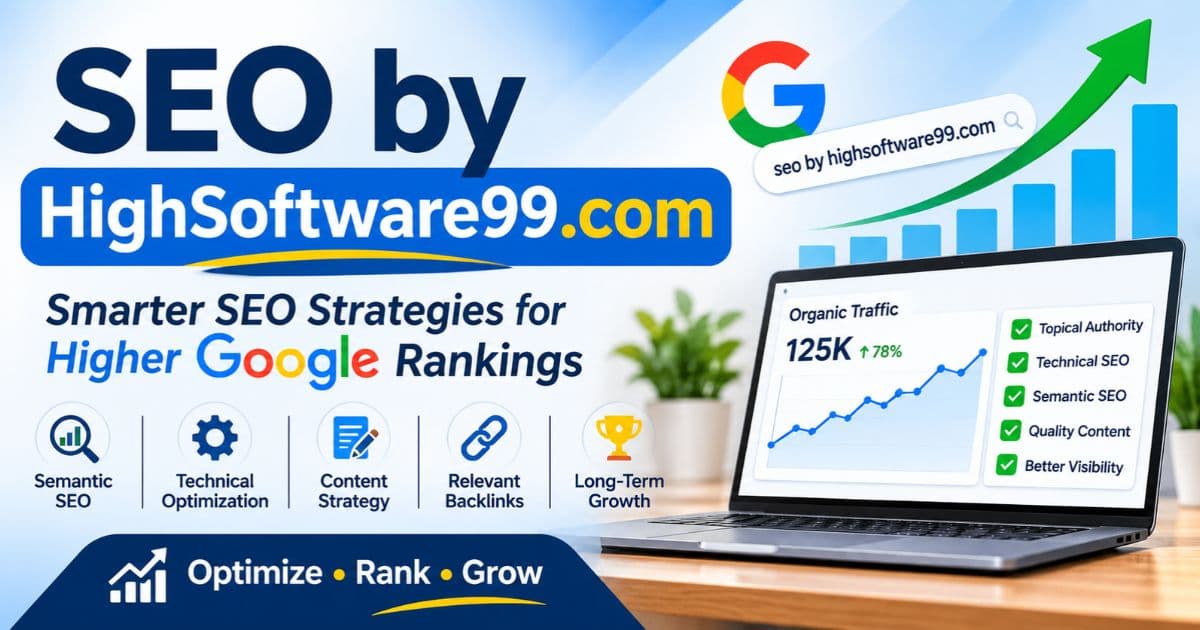
SEO by HighSoftware99.com is a branded approach to search engine optimization that discusses several modern SEO practices, including semantic SEO, technical website optimization, topical authority, structured content, and search visibility. Its published methodology emphasizes organizing website information so that search engines can better understand the relationship between different topics and pages.
For website owners exploring modern SEO services, understanding this approach can help them evaluate its features and compare them with established search engine optimization practices. This guide examines SEO by HighSoftware99.com, explains its major concepts, explores its potential advantages, and discusses important considerations before investing in an SEO campaign.
What Is SEO by HighSoftware99.com?
SEO by HighSoftware99.com refers to a branded search engine optimization approach associated with HighSoftware99. Its published material describes a framework combining semantic SEO, technical optimization, content development, internal linking, and authority-building practices. The central idea is to improve how websites organize and communicate information rather than relying exclusively on individual keywords.
Traditional SEO campaigns sometimes focus heavily on optimizing individual pages for specific search terms. Modern search optimization takes a broader approach by considering the meaning behind queries, the relationships between subjects, and the usefulness of information presented to visitors. This makes content organization and topical coverage important parts of a website’s overall SEO strategy.
HighSoftware99’s published framework also discusses technical performance and structured data. These elements can support search engine accessibility and help communicate information about webpages. However, they should work alongside useful content rather than replace it.
The Main Purpose of the HighSoftware99 SEO Approach
The main objective described in the methodology is to create a more organized website that communicates its subject matter clearly. A website covering several related topics can benefit from a logical structure that helps visitors navigate between relevant resources.
For example, a digital marketing website might organize its content into categories such as keyword research, technical SEO, content optimization, local SEO, and link building. Each category can contain detailed supporting articles that explain individual concepts.
This type of organization offers several practical advantages:
- Makes important information easier to locate.
- Creates meaningful relationships between related pages.
- Helps search engines discover website content.
- Reduces unnecessary overlap between articles.
- Provides a clearer experience for website visitors.
The goal is not simply to create more pages. It is to develop a useful collection of resources that covers the website’s subject in a logical and meaningful way.
How Does the SEO by HighSoftware99.com Methodology Work?
The published HighSoftware99 methodology describes a structured approach involving entity mapping, topical authority, content development, technical SEO, structured data, and contextual link building. These areas are closely connected because website visibility depends on several aspects of search optimization working together.
Understanding these components is useful for website owners who want to assess whether an SEO strategy addresses their actual website requirements. Each component solves a different problem, and its effectiveness depends on how appropriately it is implemented.
Entity Mapping and Topical Authority
Entity mapping involves identifying the main subject of a website and the related concepts that provide additional context. An entity can represent a person, organization, product, service, location, or other clearly identifiable subject.
For example, a website focused on search engine optimization might include related entities such as Google Search Console, keyword research, backlinks, crawling, indexing, structured data, and Core Web Vitals. Organizing these subjects into relevant categories helps create a comprehensive content structure.
Topical authority is commonly discussed in modern SEO because websites need to demonstrate relevance and useful coverage of the subjects they target. A well-organized website can provide readers with a collection of connected resources instead of isolated articles that have no meaningful relationship.
A practical topical mapping process may include:
- Identifying the website’s primary subject.
- Researching closely related topics.
- Grouping keywords according to search intent.
- Planning pillar pages and supporting articles.
- Connecting related resources through internal links.
- Reviewing existing pages for content gaps and duplication.
Entity mapping is a planning technique, not a guarantee of higher Google rankings. Its value comes from creating a more useful and understandable website.
Content Depth and Semantic SEO
Semantic SEO focuses on meaning, context, and relationships between subjects. Instead of repeating one exact-match keyword throughout an article, content creators explain the subject using relevant terminology and useful supporting information.
For example, an article about technical SEO may naturally discuss website crawling, indexing, XML sitemaps, canonical tags, page speed, mobile usability, and structured data. These concepts provide context because they are closely connected to the primary subject.
HighSoftware99’s published material also discusses an Entity-Attribute-Value approach to content organization. In this framework, content describes an entity, explains its attributes, and establishes relevant relationships.
A practical semantic content strategy should include:
- Clear definitions of important concepts.
- Explanations of relevant features and characteristics.
- Examples that help readers understand difficult topics.
- Useful connections between related subjects.
- Accurate information supported by reliable sources.
Semantic SEO should not become an excuse for adding unrelated keywords or unnecessarily expanding articles. Every section should contribute to the reader’s understanding.
Technical SEO and Website Performance Optimization
Technical SEO is another important part of the HighSoftware99 framework. Even useful content can experience search visibility problems when a website has serious crawling, indexing, rendering, or accessibility issues.
Technical optimization focuses on making website pages accessible to search engine crawlers and usable for visitors. It includes website architecture, server performance, mobile compatibility, internal navigation, and other infrastructure-related improvements.
For example, a page that is accidentally marked as noindex may not appear in Google search results even if its content is useful. Similarly, broken internal links can make important resources more difficult to discover.
Website Speed and Core Web Vitals
Website speed influences how visitors experience a website. Slow-loading pages can make navigation frustrating, especially for users accessing websites through mobile devices or slower internet connections.
Core Web Vitals provide measurable indicators of user experience. Google identifies three primary metrics:
- Largest Contentful Paint (LCP): Measures loading performance. A good result is 2.5 seconds or less.
- Interaction to Next Paint (INP): Measures responsiveness. A good result is 200 milliseconds or less.
- Cumulative Layout Shift (CLS): Measures visual stability. A good result is 0.1 or less.
Website owners can use PageSpeed Insights and Google Search Console to identify performance problems and understand where improvements may be necessary.
Common optimization activities include compressing images, reducing unnecessary scripts, implementing browser caching, choosing reliable hosting, and improving server response times.
HighSoftware99’s published material mentions additional technical targets, including a TTFB target below 200 milliseconds and a DOM node limit below 1,200 elements. These are provider-stated targets rather than universal Google ranking requirements. Actual technical improvements should be evaluated using reliable measurements and the needs of each website.
Crawlability and Indexing Improvements
Crawling and indexing are essential stages of Google’s search process. Crawling allows Google to discover and access pages, while indexing involves analyzing and storing information about eligible content.
Technical SEO helps reduce obstacles that prevent search engines from accessing important website resources. Website owners should regularly review their technical setup to identify problems that could affect search visibility.
Useful technical checks include:
- Reviewing the robots.txt file.
- Checking XML sitemap accessibility.
- Inspecting canonical URLs.
- Identifying broken links and redirect chains.
- Checking for accidental noindex directives.
- Reviewing mobile usability and rendering.
- Monitoring indexing reports in Google Search Console.
These improvements make a website easier to maintain and help search engines process its content. However, technical accessibility does not automatically guarantee indexing or ranking.
On-Page SEO and Content Optimization
On-page SEO involves improving individual webpages so that their subjects and purposes are communicated clearly. It includes titles, headings, descriptions, content organization, images, and internal links.
The HighSoftware99 approach discusses structured content and semantic clarity as important elements of page optimization. These practices are consistent with the broader goal of making webpages understandable to both visitors and search engines.
A properly optimized article should answer the main search query early and provide enough supporting information to satisfy the reader. Its headings should describe the information found within each section rather than simply repeat the primary keyword.
Keyword Research and Search Intent
Keyword research helps website owners understand the language people use when searching for information. However, choosing keywords based only on search volume can result in articles that attract the wrong audience.
Search intent provides additional context. A person searching for a definition expects a different result from someone looking for a comparison or a step-by-step guide.
Common search intent categories include:
- Informational intent: Looking for explanations, definitions, and guides.
- Navigational intent: Trying to find a particular website or webpage.
- Commercial investigation: Comparing products or services before making a decision.
- Transactional intent: Preparing to purchase or complete an action.
A useful keyword strategy considers the primary query, related searches, competition, and the type of content already appearing in search results.
For informational blogs, this means creating articles that answer real questions instead of filling pages with repetitive keyword variations.
Heading Structure and Internal Linking
Headings create a logical hierarchy within an article. A descriptive H1 introduces the main subject, while H2 and H3 headings divide the content into understandable sections.
Internal links connect related pages on the same website. They can help readers discover additional resources and provide search engines with paths to other important pages.
For example, an article explaining on-page SEO might link to supporting guides about keyword research, meta descriptions, image optimization, and internal linking. These connections should be relevant to the information being discussed.
Good internal linking practices include:
- Using descriptive anchor text.
- Linking to genuinely relevant pages.
- Avoiding excessive links within short paragraphs.
- Reviewing important pages for broken links.
- Connecting supporting articles to relevant category or pillar pages.
A useful internal linking structure improves website navigation and supports a more organized content architecture.
Structured Data and Schema Markup
Structured data provides additional information about webpage content through a standardized format that search engines can interpret. Schema.org vocabulary is commonly used to describe articles, organizations, products, businesses, and other types of information.
HighSoftware99’s published methodology discusses JSON-LD structured data as part of its semantic SEO framework. JSON-LD is a format that allows website owners to add structured information without changing the visible wording of the article.
Different schema types serve different purposes. For example, Article schema can describe an editorial page, Organization schema can identify a business, and BreadcrumbList schema can describe a page’s position within website navigation.
Common Schema Types for Informational Websites
Several schema types may be appropriate depending on the actual content and website structure:
- Article: Describes an editorial article or blog post.
- BlogPosting: Provides more specific information about a blog article.
- Organization: Identifies an organization and its relevant details.
- WebSite: Describes a website.
- BreadcrumbList: Represents a navigational breadcrumb structure.
- Person: Describes an actual individual when appropriate.
Structured data must accurately represent visible and relevant webpage information. Adding misleading markup or marking up information that visitors cannot see can create problems.
Schema markup can make eligible pages understandable for certain search features, but it does not guarantee rich results or improved rankings.
Off-Page SEO and Contextual Link Building
Off-page SEO includes activities outside a website that can contribute to its reputation and online visibility. Backlinks are one of the best-known elements of off-page optimization because links from other websites can help search engines discover content and evaluate relationships between pages.
HighSoftware99’s published approach emphasizes contextual relevance rather than simply increasing backlink quantities. This is an important distinction because a large collection of unrelated or manipulative links is not a sustainable SEO strategy.
For example, a backlink from a relevant industry publication may be more useful to a digital marketing website than a link placed on an unrelated page with no meaningful connection to its subject.
Building Relevant and Natural Backlinks
A responsible link-building campaign should focus on earning links through useful information, industry relationships, and legitimate editorial opportunities.
Common link-building methods include:
- Publishing original research and useful resources.
- Contributing informative guest articles to relevant publications.
- Building relationships with industry websites.
- Participating in legitimate professional communities.
- Creating resources that other publishers may naturally reference.
- Recovering relevant unlinked brand mentions when appropriate.
Website owners should also evaluate the quality and relevance of linking websites instead of relying entirely on third-party domain authority scores.
Paid links intended to manipulate rankings, excessive link exchanges, and automated link schemes can create search spam risks. Google’s link spam policies should be reviewed before starting a backlink campaign.
SEO by HighSoftware99.com Compared With Traditional SEO
Traditional SEO and modern semantic SEO share many fundamental practices. Both approaches involve keyword research, useful content, website optimization, and link development.
The difference often comes from the way these activities are organized and prioritized. A keyword-focused campaign might begin by selecting individual search terms and optimizing separate pages. A semantic approach starts by understanding the broader subject and building relationships between related content.
The HighSoftware99 methodology presents itself as a structured approach that combines these concepts with additional technical performance and entity-based content planning.
Key Differences in SEO Strategies
The following comparison explains the general differences between keyword-centered and broader semantic SEO approaches:
| SEO area | Traditional keyword-focused approach | Semantic SEO approach |
|---|---|---|
| Keyword strategy | Individual keyword targeting | Topic and entity relationships |
| Content planning | Separate keyword pages | Connected topic clusters |
| Article structure | Basic heading optimization | Logical semantic organization |
| Internal links | General page connections | Contextual topic relationships |
| Technical SEO | Basic technical checks | Detailed technical optimization |
| Content quality | Keyword relevance | Relevance, depth, and usefulness |
| Link building | Often focused on link quantity | Greater emphasis on relevance |
Neither approach should ignore established SEO fundamentals. Keyword research remains useful, and semantic organization does not replace technical accessibility, editorial quality, or legitimate authority-building practices.
Potential Benefits of a Structured SEO Approach
A structured SEO framework can help website owners organize their optimization activities and identify areas that need attention. Rather than treating each webpage as an isolated project, it encourages a more complete view of website performance.
The potential benefits depend on implementation quality, competition, website history, and the resources invested in the campaign. No particular framework can guarantee specific rankings or traffic increases.
Better Content Organization and Topical Coverage
One potential advantage is improved content planning. By identifying related topics before creating new articles, website owners can avoid unnecessary duplication and develop a more useful collection of resources.
For bloggers, this can be particularly helpful when building a niche website. Instead of publishing unrelated articles every week, they can organize their editorial calendar around a central topic and its supporting subjects.
A practical content planning process might involve:
- Selecting the main subject of the website.
- Identifying the most important subtopics.
- Researching the search intent behind each topic.
- Creating pillar pages and supporting articles.
- Connecting relevant pages with internal links.
- Reviewing the content regularly for gaps and outdated information.
This approach creates a clearer publishing direction and makes it easier to identify which topics deserve further development.
Improved Technical Awareness and Website Usability
Another potential benefit is greater attention to website infrastructure. Technical problems can prevent visitors from accessing information comfortably and may make it harder for search engines to discover or process important pages.
Regular technical audits help website owners identify issues before they become larger problems. They can also provide a clearer understanding of how hosting, caching, images, scripts, and website architecture affect performance.
Better usability benefits visitors directly. Clear navigation, readable typography, responsive layouts, and accessible content make websites easier to use across different devices.
Google Autocomplete and Instant Search Visibility
One distinctive aspect of the HighSoftware99 brand’s published material is its discussion of Google Autocomplete, sometimes called ATC, and rapid search visibility. The provider’s material describes methods intended to make branded phrases appear in autocomplete suggestions.
Google Autocomplete is a search feature that predicts possible queries as people type. Its suggestions are generated through automated systems that consider several factors, including common searches, language, location, and other contextual signals.
Autocomplete visibility is different from achieving a traditional organic ranking. A phrase appearing as a suggestion does not necessarily mean that a website ranks on the first page for that phrase.
Understanding Instant Appear SEO Claims
Rapid visibility claims can sound attractive to website owners who want results without waiting through a lengthy SEO campaign. However, it is important to understand exactly what a provider means by terms such as instant appearance, autocomplete placement, or accelerated visibility.
Before paying for such a service, ask for clear explanations of the process and the evidence supporting its results.
Important questions include:
- Does the service improve conventional organic search rankings?
- Is it targeting Google Autocomplete or regular search results?
- How are visibility changes measured?
- Are results consistent across different locations and devices?
- Does the provider use genuine search demand?
- Could the method violate search engine policies?
- What happens if the visibility disappears?
Website owners should avoid methods that rely on artificial traffic, automated searches, or other attempts to manipulate search systems. Google publishes policies covering automated traffic and other forms of search manipulation.
A short-term appearance in a search feature should never be treated as proof of sustainable organic growth.
Who Can Benefit From Modern SEO Strategies?
Modern SEO practices can be useful for different types of websites because most online businesses depend on discoverability, relevant traffic, and a positive user experience.
However, every website has different goals. An informational blog may prioritize organic readership, while an online store may focus on product discovery and conversions. A local business may need stronger visibility in location-based searches.
Understanding the website’s audience and objectives is essential before selecting an SEO provider or implementing a particular methodology.
Bloggers and Informational Websites
Bloggers can benefit from organized keyword research, topical planning, and content optimization. These practices help publishers create resources that address specific questions and connect related subjects.
For example, a technology blog might publish a main guide about cybersecurity and supporting articles about password security, phishing prevention, data protection, and safe browsing.
A connected collection of useful resources gives visitors more opportunities to explore the subject and helps the publisher maintain a consistent editorial direction.
Small Businesses and Service Providers
Small businesses often compete with larger companies that have more marketing resources. Local SEO and focused content strategies can help them reach people searching for relevant services in specific areas.
Important activities may include:
- Maintaining an accurate Google Business Profile.
- Creating useful location-specific pages.
- Keeping business contact details consistent.
- Collecting genuine customer reviews.
- Publishing helpful service information.
- Improving mobile website usability.
These activities should reflect the actual business, its services, and the locations it serves.
E-Commerce and Affiliate Websites
Online stores can benefit from structured product categories, descriptive product information, technical SEO, and appropriate Product structured data.
Affiliate publishers can improve their content by providing original comparisons, practical buying guidance, transparent disclosures, and useful product information.
In both cases, the main priority should be helping visitors make informed decisions rather than creating pages solely to target commercial keywords.
Things to Consider Before Choosing SEO by HighSoftware99.com
Before investing in any SEO service, website owners should examine the provider’s methodology, experience, communication, and reporting practices. A professional-looking website or detailed technical terminology is not sufficient evidence that a service will produce positive results.
HighSoftware99 has published information about its semantic SEO framework and technical targets. However, readers should independently verify performance claims, service availability, pricing, and actual client outcomes before making a purchasing decision.
Evaluate Transparency and Reporting
A reliable SEO provider should explain the work being performed and provide a way to measure progress. Website owners should understand which pages are being optimized, what technical changes are proposed, and how results will be evaluated.
Before starting an engagement, request information about:
- The scope of the SEO campaign.
- The specific technical and content tasks involved.
- The backlink acquisition process.
- Access to reporting and analytics.
- Expected deliverables and timelines.
- Pricing, cancellation, and contract conditions.
- Ownership of website content and accounts.
Avoid providers that refuse to explain their techniques or promise guaranteed first-page rankings.
Understand the Risks of Unrealistic Promises
SEO involves competition and changing search systems. No agency can control every factor affecting Google’s ranking decisions.
Promises of guaranteed rankings, instant traffic growth, or permanent first-place positions should therefore be treated cautiously.
It is also important to distinguish legitimate optimization from methods that attempt to manipulate search systems. Automated traffic, misleading redirects, hidden text, and manipulative link schemes can expose websites to search spam problems.
A sensible SEO investment should prioritize long-term improvements, transparent reporting, and compliance with search engine guidelines.
How to Measure the Results of an SEO Campaign?
Measuring performance is necessary to understand whether an SEO strategy is achieving its intended objectives. Rankings alone do not provide a complete picture because search positions can vary by location, device, and query.
Website owners should combine search visibility data with traffic, engagement, and business outcomes. This makes it easier to identify which improvements are producing meaningful results.
Useful SEO Performance Metrics
Google Search Console is an important free resource for monitoring how a website performs in Google Search. It provides information about impressions, clicks, click-through rates, average positions, and indexing issues.
Google Analytics can provide additional information about website visits, visitor behavior, and conversions.
Some useful metrics include:
- Organic search clicks.
- Search impressions.
- Click-through rate.
- Average search position.
- Number of indexed pages.
- Relevant keyword visibility.
- Qualified website visits.
- Leads, enquiries, or sales where applicable.
- Core Web Vitals performance.
These measurements should be evaluated over meaningful periods rather than relying on a single day’s results.
Why Continuous Optimization Matters
SEO is an ongoing process because competitors publish new resources, search behavior changes, and websites evolve. An article that performs well today may need updates when information becomes outdated or search intent changes.
Regular content reviews can help identify missing information, broken links, inaccurate claims, and opportunities to improve readability.
Technical audits can also reveal new issues caused by plugin updates, theme changes, hosting problems, or changes to website architecture.
Continuous improvement should be based on actual evidence and user needs rather than changing pages simply to make them appear fresh.
Conclusion
SEO by HighSoftware99.com represents a branded approach to modern search engine optimization that emphasizes semantic SEO, topical authority, technical performance, structured content, and contextual linking. These concepts are relevant to website owners who want to develop a more organized approach to improving search visibility.
Its published framework includes several practices that are also recognized parts of broader SEO work, such as keyword research, content optimization, crawlability improvements, structured data, and relevant link building. However, individual performance claims and rapid visibility promises should be independently verified rather than accepted as guaranteed outcomes.
For bloggers, businesses, and website owners, the most sustainable approach is to focus on useful information, clear website architecture, technically accessible pages, and legitimate authority-building activities. Combining these fundamentals with regular performance monitoring provides a more reliable foundation for long-term organic search growth.
RELATED POST: Voozon.com: What Is It, How It Works, and What You Should Know